Müge Özker Sertel

Active Research Projects

Speech Monitoring

Speech Monitoring

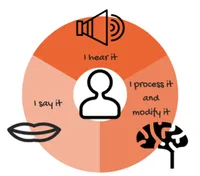
Accurate and fluent speech relies on the brain’s ability to constantly monitor our voice and articulation, ensuring that what we say aligns with what we intended. When an error occurs, the brain rapidly adjusts its motor commands. This real-time feedback system is fundamental throughout our lives. It allows infants to map their vocal cords to sounds and helps adults learn new languages. Disruptions in this monitoring system are linked to speech disorders like stuttering and explain why speech patterns often shift when hearing declines. This project investigates the functional and anatomical networks that support the sensorimotor interactions underlying this monitoring process. By using sensory feedback manipulations to experimentally induce speech errors, we examine how the brain detects, processes, and attempts to correct these errors in real time.
Functional White Matter Atlas of Language

Functional White Matter Atlas of Language

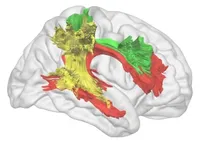
Language processing emerges from dynamic interactions among distributed brain regions, with the specific areas engaged depending on the linguistic demands. Functional neuroimaging has greatly advanced our understanding of which cortical regions support these processes and how they co-activate or influence one another. However, the anatomical circuits that enable these interactions remain far less understood. We aim to identify the white-matter pathways engaged during language processing. To do so, we employ a novel method, the Functionnectome, that integrates task-related fMRI signals with white-matter anatomy to map the functional contribution of underlying tracts. This approach will yield the first functional white-matter maps that reveal how anatomically connected regions jointly support language functions.

Individual Variability in Language Processing

Individual Variability in Language Processing

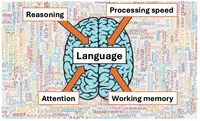
Individuals vary widely in domain-general cognitive abilities, such as working memory, processing speed, and non-verbal reasoning. This project investigates how differences in these abilities shape language processing and influence the neural systems supporting language comprehension and production. By combining large-scale behavioral and neuroimaging datasets collected through the Language in Interaction consortium in the Netherlands (https://www.dcc.ru.nl/languageininteraction), we aim to understand why individuals differ in their ability to process language and how broader cognitive resources contribute to flexible language use.

Voice and Speech Problems in Parkinson’s Disease

Voice and Speech Problems in Parkinson’s Disease

Speaking requires a sequence of rapid, precise actions: generating sound in the larynx, shaping it into distinct words, and coordinating physical movements to seamlessly string those words into conversation. Up to 90% of individuals with Parkinson’s disease face voice and speech difficulties, collectively known as hypokinetic dysarthria. These symptoms such as soft, monotone, or slurred speech can turn everyday communication into a struggle. This project aims to break down these complex symptoms and uncover their underlying causes. By combining speech experiments with brain tractography, we work to pinpoint the exact neural pathways disrupted by the disease.